
An economic perspective for mid-market B2B manufacturers navigating supply chain disruptions in the electronics industry.

For mid-market B2B manufacturers, relying on commercial off-the-shelf (COTS) System on Modules (SOMs) and Single Board Computers (SBCs) is no longer a low-risk strategy. IP ownership — once seen as a cost center — is emerging as a primary mechanism to protect business continuity, stabilize margins, and secure market share during volatile supply cycles.
Over the past decade, repeated supply chain shocks have exposed a structural vulnerability in electronics manufacturing. While COVID-19 was an outlier, the predictable seven-year semiconductor cycle is officially dead. In its place is a volatile, desynchronized market where component scarcity occurs more frequently, lasts longer, and hits harder.
Navigating this new normal requires new approaches to mitigate risk to business continuity. The past was dominated by “if it ain’t broke, don’t fix it,” and buying off-the-shelf solutions was the lowest-cost option, often with the most favorable risk profile. But off-the-shelf solutions offer limited flexibility when supply chain issues arise. This is particularly true when looking at sole-sourced components such as SOMs and SBCs.
It’s time to re-evaluate traditional make-vs.-buy paradigms and off-the-shelf-vs.-custom strategies. Business leaders who wish to capitalize rather than survive during periods of supply chain disruption should consider IP ownership.
THE ARGUMENT
IP ownership of both off-the-shelf and custom SOMs is a pathway to prioritizing long-term business continuity — without the historical problems of custom solutions, and without the handcuffs typical of off-the-shelf solutions.
This paper is focused on the perspective of business continuity, rather than the technical or legal benefits of IP ownership. Business managers and leaders for mid-market B2B manufacturers are the target audience for this discussion. This is an economic perspective, meaning it’s focused on decision making surrounded by scarcity, supply and demand, opportunity costs, and incentives.
The paper is focused on system-level solutions and not intended for individual components. There are many tried-and-true solutions to navigate uncertain supply for individual components. This paper views SOMs and SBCs as entirely different from simple components and thus requiring new solutions. This paper is not for mid-market B2B manufacturers that are capable of chip-down solutions composing the entire electronics product.
A strong argument can be made that it’s always a good time to plan for the next scarcity phase of the cycle, even during long periods of abundant supply. Current conditions suggest AI will disrupt most industries in some manner, and the Age of AI is just beginning. It’s not too late to start planning for supply volatility.
Business leaders tasked with executing make-vs.-buy decisions and then COTS-vs.-custom decisions need to be aware of the paradigm shift occurring. COTS was almost always the preferred choice, as was buy. This came from the misconception of semiconductors as pure commodities. They are not, and treating them as such might take down your business someday. That is not an overstatement, as many manufacturing companies have gone out of business in the last several years. Fortunately, new solutions have emerged that change the math behind make/buy, COTS/custom decisions.
Finally, this paper looks at the increasingly common occurrence of semiconductor scarcity (limited supply during periods of insatiable demand), the supply and demand mechanics affecting semiconductor pricing and availability, the incentives driving business leaders’ decisions, and the hidden costs businesses realize when they fail to properly account for the role of IP ownership during periods of semiconductor scarcity.
Supply chain professionals working during the COVID years likely used the term “Golden Screw.” The concept of the Golden Screw is that the component which is most scarce, and delays an entire product’s revenue, becomes the most valuable — regardless of what it costs. In the metaphor of a billion-dollar airplane, a lowly common screw becoming scarce can keep the entire aircraft from being completed, reducing revenue to zero.
Just-In-Time (JIT) manufacturing strategies can turn complex products into a house of cards, where a single supply chain disruption delays revenue and carries the added penalty of negative domino effects down the value stream. Complex electronic assemblies use hundreds of unique electronic components, and history shows it’s nearly impossible to predict which type of component is entering a scarcity phase next. Therefore, electronic products have hundreds of components that could become the Golden Screw.
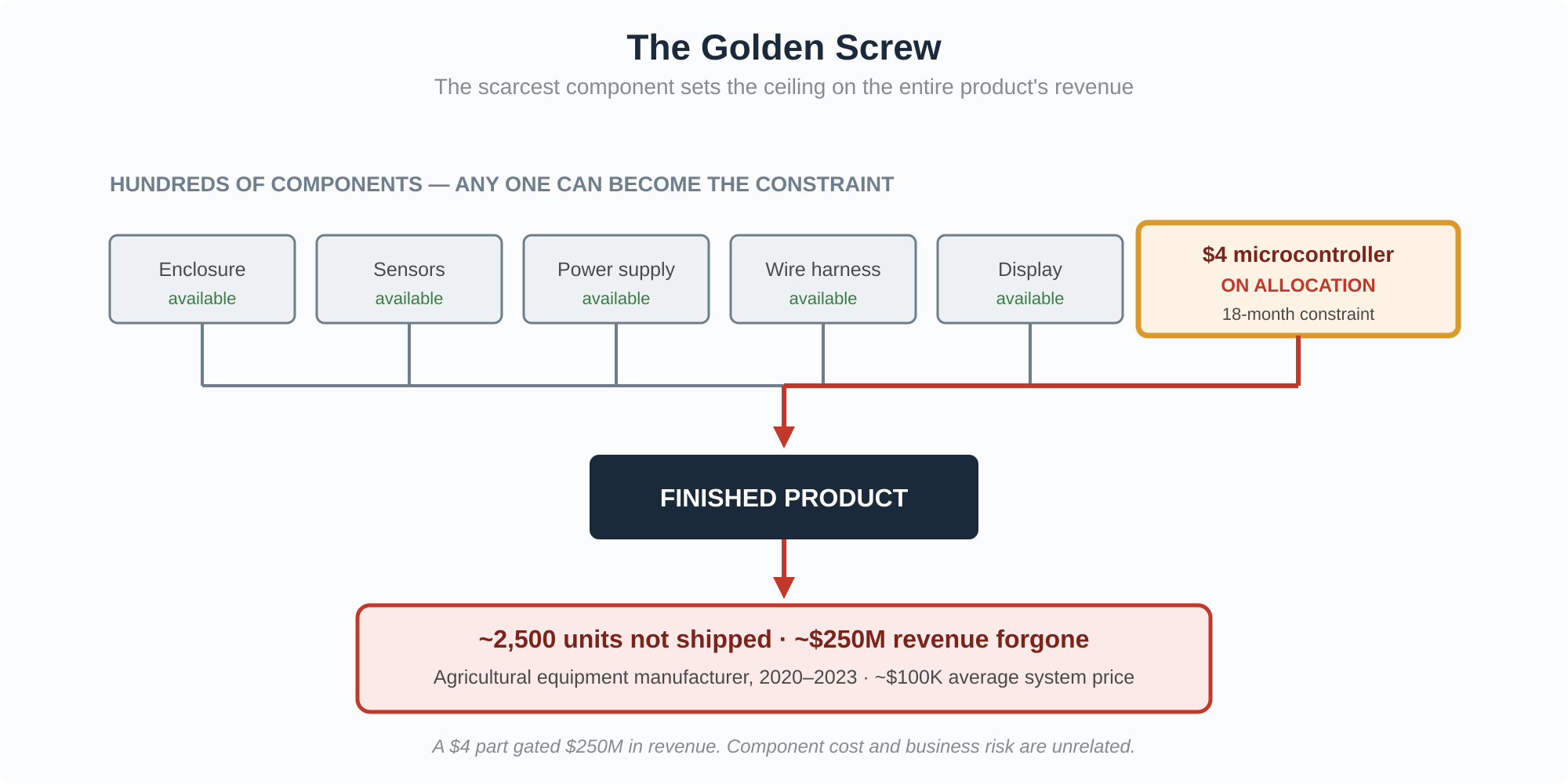
Figure 1 — A single constrained component sets the revenue ceiling for the entire product, regardless of its unit cost.
While the market dynamics driving the scarcity/abundance cycles of components have been around since the birth of modern electronics, the industry has entered a new era. The typical seven-year cycle from component abundance to scarcity is shortening and becoming much less predictable. What market forces are driving those changes? Over the years, new technological inventions have driven component shortages through dramatic, sudden increases in consumer demand. Consider the mid-90s proliferation of personal computers brought on by the internet era. The early 2000s brought us mobile phone proliferation, and the invention of the smartphone further increased electronic component demand.
Circling back to the Golden Screw — what happens when a component in your assembly becomes scarce? At a high level, costs increase. Whether it’s as simple as the component becoming more expensive to acquire, or inventory strategies focused on mitigating shortages, increasing carrying and inventory costs — that’s the best-case outcome. More often, production is stopped, or at least throttled, by receiving fewer components than desired. Opportunity costs soar when production is constrained or stopped. Efficiency degrades, and business planning and forecasting become extremely difficult. This is no position a forward-looking manufacturer wants to be in. Proactive planning and growth are replaced by reactive, short-term choices. This is the domino effect on your business, even if the affected product is a small part of your corporate strategy.
THE POINT
A $4 part gated $250M in revenue. The cost of a component and the business risk it carries are unrelated — which is exactly why component-level thinking fails at the system level.
The proliferation of low-cost, high-performance COTS SOMs previously simplified the make-vs.-buy decision. However, treating complex assemblies as pure commodities creates severe blind spots. When supply chain bottlenecks hit, COTS solutions turn into single-source traps. Mid-market manufacturers have enjoyed plentiful supply and high cost/performance benefits from COTS SOMs — when supply is plentiful, mid-market manufacturers benefit. As COVID demonstrated, manufacturers that did not own their IP experienced the pain when scarcity hit. Options were few, and feasible solutions were even more limited. Solutions that were feasible were often extremely expensive — a complete redesign, for instance — and often didn’t offer a complete solution.
This is where the myth of “semiconductors are commodities” falls apart. COTS SOMs are not interchangeable, and there are always significant costs to change from one COTS SOM to another. Furthermore, market conditions that affect a COTS SOM often affect many other COTS SOMs from other vendors — disruptions affect all COTS SOMs in similar ways. Meanwhile, the semiconductor supply outlook is clear: much more supply scarcity is going to be the norm, and plentiful supply is going to be rare.
WHERE THE MYTH BREAKS
COTS SOMs are not interchangeable. There is always a significant cost to move from one to another, and the conditions that constrain one module usually constrain the alternatives at the same time. Disruption hits the whole category, not one supplier.
Let’s look at a case study of a mid-market manufacturer affected by COVID-related supply chain constraints during 2020–2023. They manufactured agricultural equipment that historically was mechanical in nature. Their product typically sold in the range of $75,000 to $125,000 per system, at average annual volumes of 1,000–3,000 units per year. The system was controlled by an embedded computer, and during COVID, components to build it became scarce. The Golden Screw in this case was a $4 microcontroller. Their production was throttled for 18 months, to the point where they missed sales on roughly 2,500 units. At an average of $100,000 per system, the company lost out on nearly $250 million in revenue.
Semiconductor cycles have always been disruptive. What lessons are forgotten and “relearned” during each cycle? What drives the cycle, and why is the cycle shortening to about half of historical norms?
Let’s start with what a typical semiconductor cycle used to look like on a seven-year timeline. The cycle starts with plentiful capacity after new capacity from semiconductor manufacturers is brought online. As demand increases, there is still plenty of supply to meet market demand. Once demand approaches supply capacity, prices start to increase and scarcity increases. The cycles were synchronized — meaning all sub-categories of semiconductors (analog, memory, power, logic, and so on) experienced the same market conditions at the same time. Semiconductor manufacturers leverage the high prices of components to fuel large capital expenditure to increase new capacity. Semiconductor CapEx to build out new factories ranges from $10B to $100B and typically occurs in large tranches rather than smaller, piecewise investments. Component prices dramatically increase during the CapEx phase. The final stage is when new capacity comes online and starts to outpace demand, lowering component costs and increasing availability.
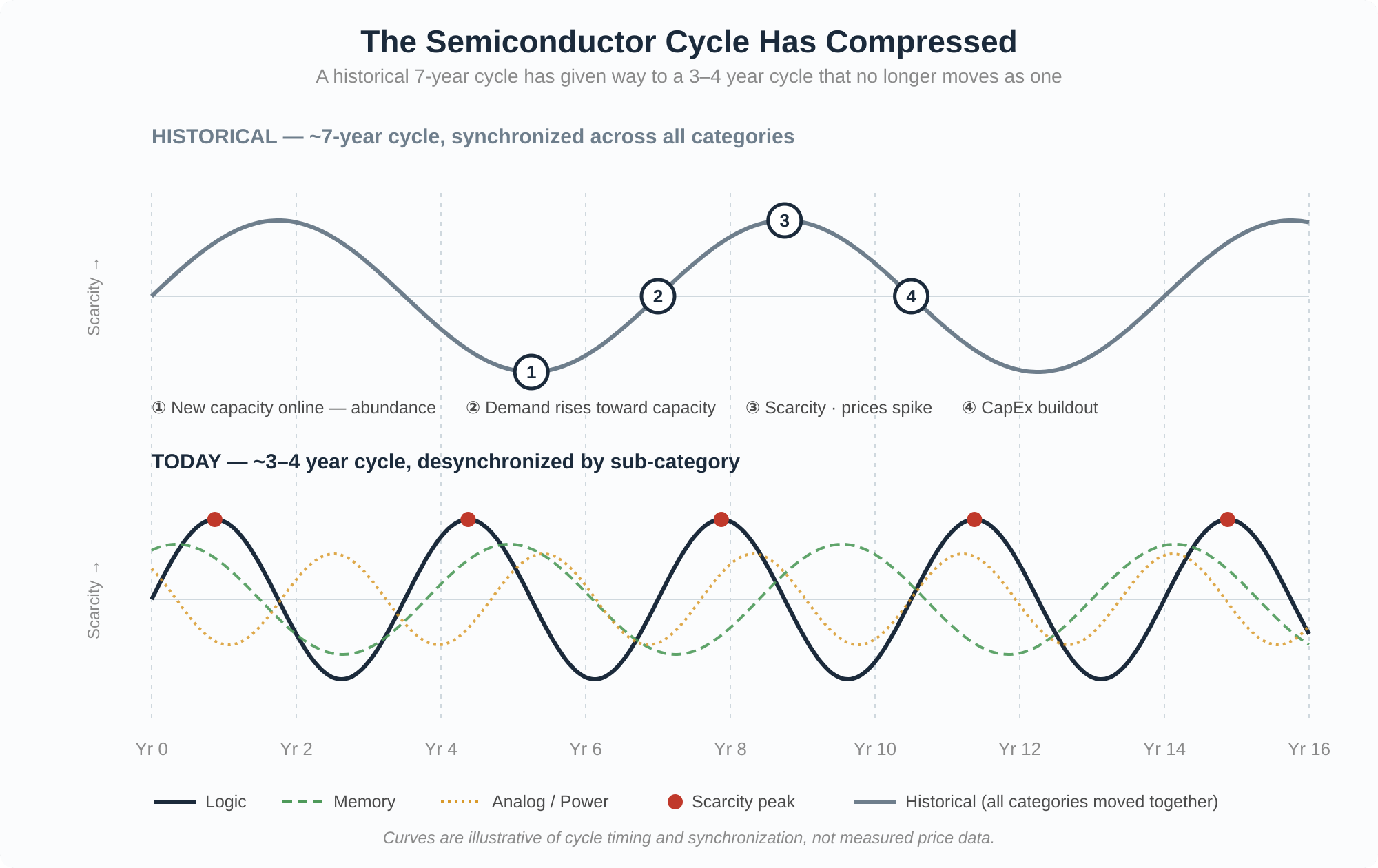
Figure 2 — The historical cycle moved as one. Today's sub-categories run on independent timing, so scarcity arrives more often and from less predictable directions.
Now that the cycle is understood, why was it a roughly seven-year cycle? The answer is that the economics of semiconductor manufacturing require large investments that dramatically increase output capacity. There is no way to increase capacity for state-of-the-art semiconductor manufacturing in smaller increments.
So why has the cycle time been cut in half? Thirty years ago, most silicon was made by vertically integrated manufacturers that designed, manufactured, and marketed their own semiconductor products. Today, TSMC alone supplies over 50% of the world’s chips. That same CapEx requirement has put contract semiconductor manufacturers — TSMC in Taiwan, SMIC in China, Samsung in Korea — at an advantage, and has driven smaller, vertically integrated manufacturers to outsource wafer fabrication to remain competitive. Significant consolidation among the largest semiconductor manufacturers has further driven the supply base toward fewer, larger players.
Thirty years ago, when one manufacturer’s demand approached capacity, other manufacturers could support the demand for most commodity semiconductors. More manufacturers going through capacity increases, in aggregate, smoothed the supply curve such that cycles lasted roughly seven years. The consolidated supply base today means fewer “incremental” increases in market-wide capacity, and more sudden, abrupt, sharp increases instead. 2024 offers a perfect example: TSMC foundry CapEx that year represented nearly 70% of all foundry CapEx. Consolidation and insatiable demand are the two primary reasons the semiconductor cycle is shortening.
There are seven primary market conditions at the heart of the fundamental shift in the current semiconductor market:
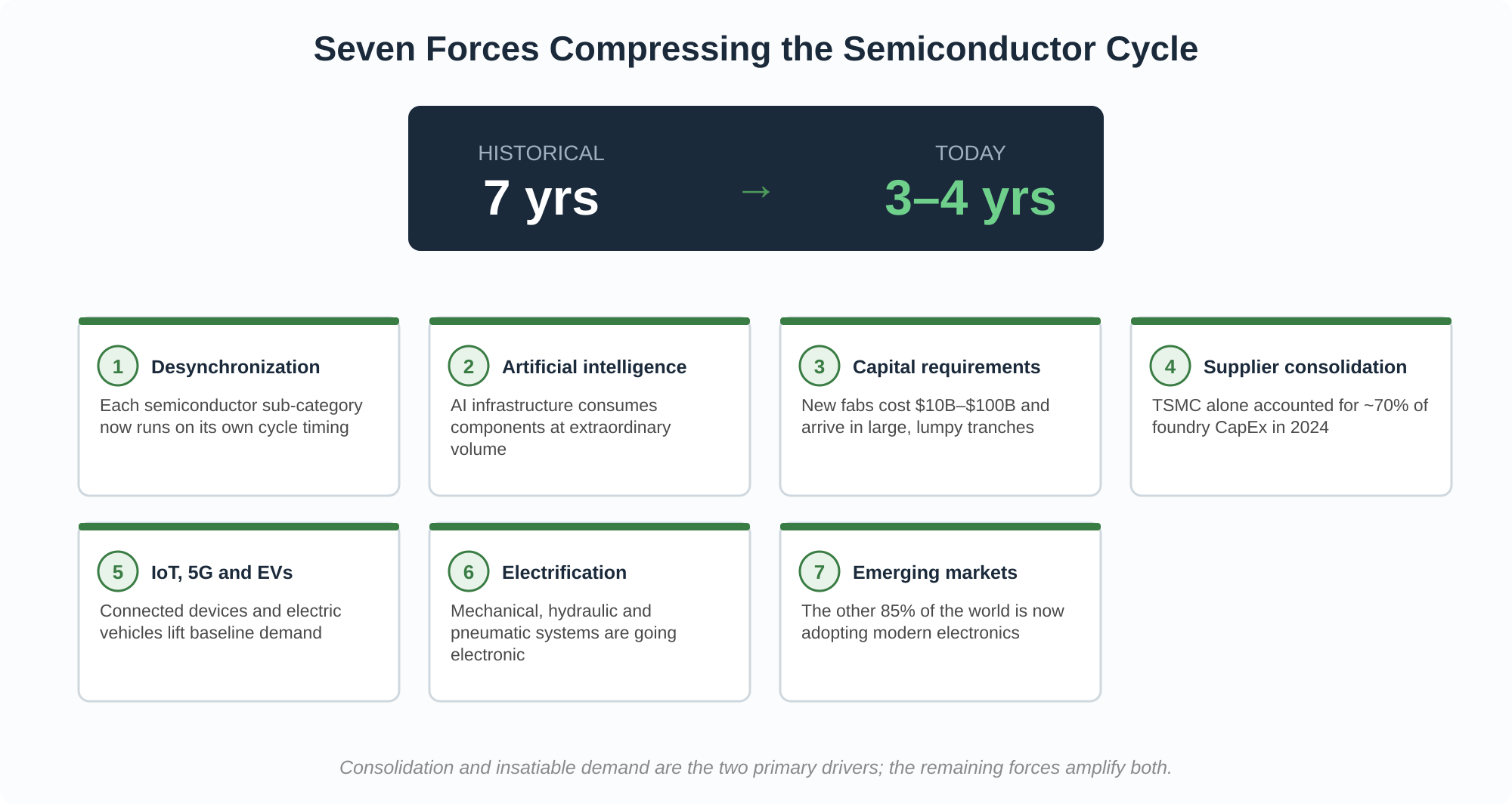
Figure 3 — Seven market conditions sit behind the shift from a seven-year cycle to a three-to-four-year cycle.
The lessons learned over the years managing the semiconductor cycle can still be used in the shortened cycle. How they are applied has to change, and more importantly, they have to actually be applied. The era of outsourcing has led many companies to forget the role IP ownership plays in navigating scarcity. As market demand shifted toward low-cost, high-performance COTS SOMs, suppliers shifted their focus away from IP ownership and toward COTS solutions. IP ownership as a supply chain tool was often an afterthought, if thought of at all, as low-cost SOMs flooded the market. Now that market conditions appear to require new solutions to supply problems, IP ownership will likely play a more prominent role — companies that leverage it will thrive during scarce supply conditions, while their competitors merely hope to survive. We’ll discuss how IP ownership strengthens your supply chain resilience next.
IP ownership provides a path toward proactively planning your business and its growth, rather than falling into reactive decision making. At its core, this approach focuses on planning for the worst while hoping for the best, whereas previous approaches simply hope for the best and survive through the worst. IP ownership comes at a cost, but it is a predictable one, and it allows business managers to plan for supply disruptions. It also requires leaders and managers to adopt new approaches and make changes to their product development processes. It is not free, nor is it “easy.” It will require precious resources, but as the analysis below shows, the return on investment is substantial.
A detailed look at the solution must begin by acknowledging the previous barriers to IP ownership. Cost, availability, intrinsic value, and global competition have all diminished the value of IP ownership from a business perspective over the last 30 years. The simple fact is that with thousands of tech companies providing SOMs and SBCs at low cost/performance ratios, mid-market manufacturers couldn’t compete with large SOM and SBC providers on cost, availability, and performance. The cost of employing an engineering team large enough to maintain existing products while generating new designs is significant, and can be larger than the capital cost of producing the product itself.
There is a solid argument for relying on SOM and SBC experts to manage supply chains, but reality has shown that holds true only for a small subset of SOM customers. That argument falls apart when the SOM supplier’s needs differ from your own. In short, your needs and the SOM supplier’s priorities are often in conflict with each other. Those conflicts show up during supply disruptions, and customers are often subject to the supplier’s choices at best, and helpless at worst.
IP ownership works with both COTS and custom solutions, but is more often employed with custom solutions. Regarding SOMs, IP ownership typically includes all hardware design (source) files necessary to manufacture the SOM, as well as the underlying operating system source code necessary to enable the SOM hardware. Whether you manufacture the SOMs yourself or outsource manufacturing to a contract manufacturer (CM), the selection of components, suppliers, and methods is entirely up to the IP owner. In other words, the IP ownership model allows you to choose the right CM for your business needs.
There are thousands of high-quality CMs in the USA, Mexico, Canada, Europe, and of course Asia that can build your SOM. IP ownership lets you use that same approach in maintaining existing SOMs and designing new products with new SOMs. How? Just as there are thousands of capable CMs to build your product, there are just as many engineering and consulting companies with the expertise required to maintain a design for supply chain resilience. Utilizing IP ownership no longer requires a large engineering staff — you can outsource as needed to supplement your existing engineering team.
It’s time to put the argument to the test. Let’s consider two different approaches to solving long-term supply chain problems surrounding SOMs and SBCs, evaluated through both a cost/benefit analysis and a total cost of ownership (TCO) analysis. Approach 1 is to use a COTS SOM. Approach 2 is to use IP ownership of a comparable custom SOM.
Assumptions: annual usage of 10,000 units per year at a cost of $150 per SOM. End-product revenue of $2,000 per unit, or $20 million of product revenue. Product lifespan of 8 years. A 3–4 year semiconductor cycle, providing 2 periods of scarcity over the lifecycle of the product. Each period assumes a 6-week disruption of production — much lower than reality, but a conservative assumption that further highlights the benefit of IP ownership.
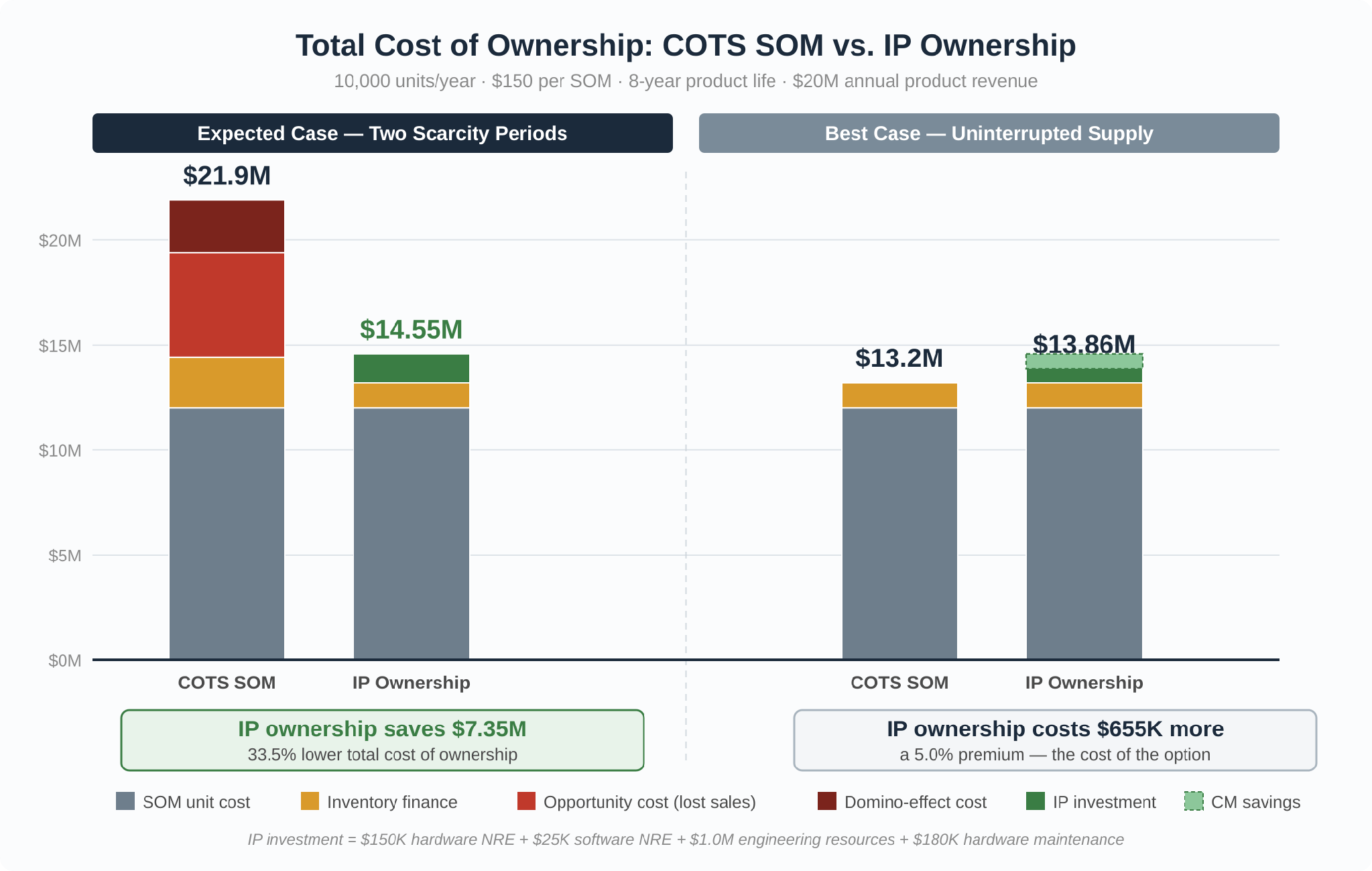
Figure 4 — Under expected conditions, IP ownership lowers total cost of ownership by $7.35M. Under uninterrupted supply, it carries a 5% premium.
Attribute
COTS
TCO
IP owned
TCO
SOM hardware development NRE
—
$0
•
$150,000
SOM software development NRE
—
$0
•
$25,000
Additional engineering resources
—
$0
•
$1,000,000
Cost of SOM
•
$12,000,000
•
$12,000,000
Opportunity costs
•
$5,000,000
—
$0
Finance cost of inventory
•
$2,400,000
•
$1,200,000
Domino effect costs
•
$2,500,000
—
$0
Hardware maintenance
—
$0
•
$180,000
TOTAL COST OF OWNERSHIP
$21,900,000
$14,555,000
The highlighted fields above show where IP ownership provides substantial value. These are often overlooked when deciding how to acquire SOMs, but they constitute nearly 50% of the TCO of SOMs over a product’s lifecycle. The opportunity costs come from direct loss of sales; the finance cost of inventory comes into play when companies address the risk by holding more SOM inventory; and the domino-effect costs result from the short-term decisions made to maintain business continuity while the production line is stopped.
While this situation is far from the worst that can happen, let’s look at these two approaches under a best-case scenario, with plentiful supply through the life of the product. Note that IP ownership still results in lower SOM costs over time, through the benefit of choosing competitive offers from CM partners and the current rate of cost decline the market is presenting.
Attribute
COTS
TCO
IP owned
TCO
SOM hardware development NRE
—
$0
•
$150,000
SOM software development NRE
—
$0
•
$25,000
Additional engineering resources
—
$0
•
$1,000,000
Cost of SOM
•
$12,000,000
•
$12,000,000
Finance cost of inventory
•
$1,200,000
•
$1,200,000
Hardware maintenance
—
$0
•
$180,000
Choice of HW vendor
—
$0
•
($700,000)
TOTAL COST OF OWNERSHIP
$13,200,000
$13,855,000
A simple cost/benefit analysis of the two tables above demonstrates a significant benefit under expected market conditions, while commanding only a roughly 5% cost premium for the SOM if miracles happen and the semiconductor market rides an eight-year wave of plentiful supply the market has never actually seen.
THE TRADE
IP ownership shows a significant benefit during expected market conditions, while commanding only a ~5% cost premium if the semiconductor market delivers an unprecedented 8-year wave of plentiful supply.
You may be asking, “How does owning IP help navigate supply challenges?” Let’s consider the Raspberry Pi CM5 module versus a custom OSM-L SOM. The CM5 likely has one, or maybe two, approved manufacturers for the DRAM on the CM5. If that manufacturer decides to focus solely on making HBM rather than standard memory for the CM5 — as Samsung, SK Hynix, and Micron have all done, prioritizing AI memory over standard DRAM — the CM5 will become scarce, and there will be very few options for companies using the CM5 as their SOM solution. There is no method of control to allow the CM5 to be built with alternative memory.
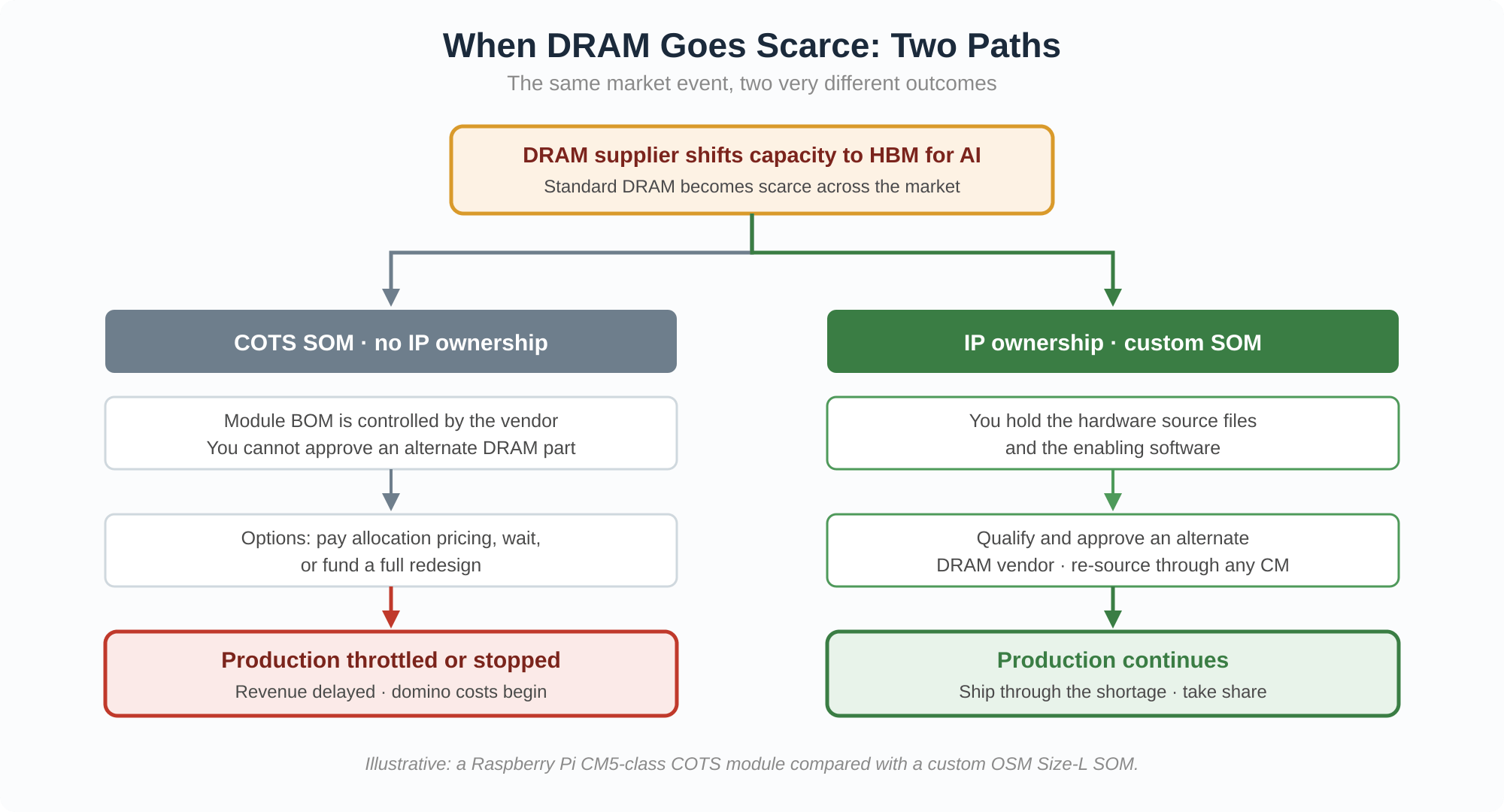
Figure 5 — The same market event produces two very different outcomes depending on who controls the bill of materials.
If you own the IP, the option to test and approve other DRAM vendors is fully available to you, and during periods of scarcity, that allows IP owners to continue manufacturing. The value of being able to continue operations during times of scarcity is enormous, and demands consideration well before the shortage arrives.
Finally, this analysis applies to make/buy decisions as well. Owning the IP simply allows mid-market manufacturers to choose whether manufacturing the SOM themselves is the right choice for their business. Buying COTS permanently locks in the supplier for the life of the product.
While simply purchasing the IP alone can provide a sound option to utilize during the next semiconductor shortage, realizing optimal outcomes requires mid-market manufacturers to take additional steps. These actions flow from the first step, which is developing a plan for when — not if — the next scarcity phase of the semiconductor cycle arrives. Below is a list of actions that must be taken to achieve optimal outcomes. This assumes a company that outsources its SOM or SBC to a vendor, through either a COTS or custom solution.
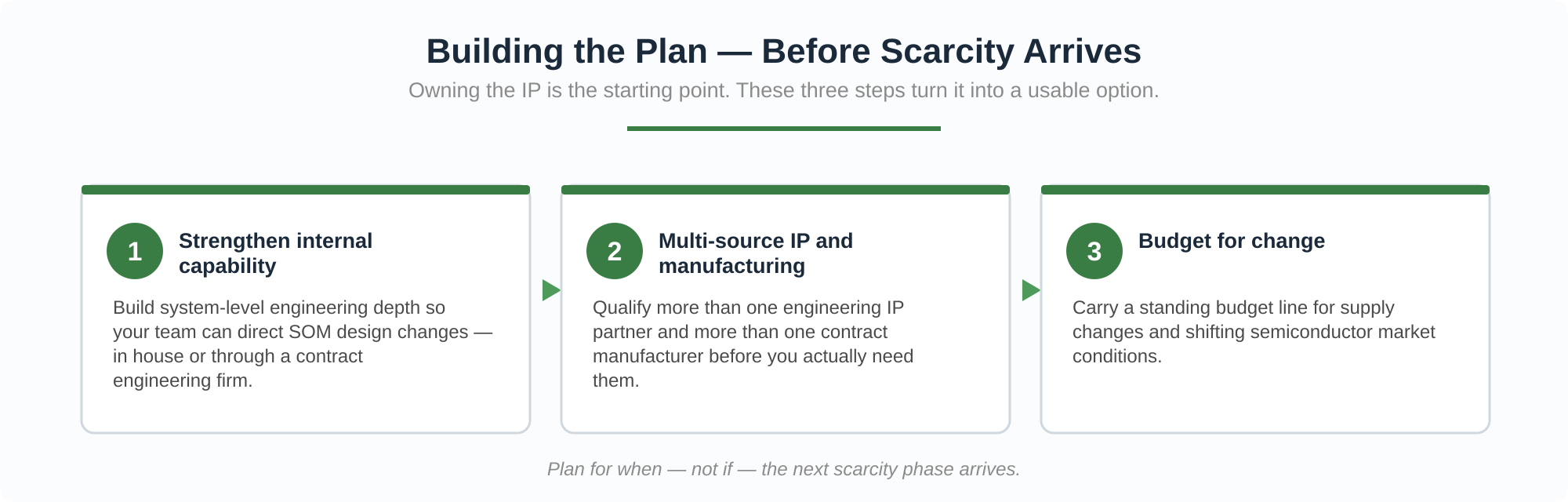
Figure 6 — Three steps that convert IP ownership from a document into a usable capability.
If a plan is in place with the steps above considered, mid-market manufacturers can execute the plan and address any supply chain challenge as it arises. To start, mid-market manufacturers must find suppliers in the market who can provide SOMs along with the IP and design files necessary to produce them. Fortunately, many design firms and SOM suppliers offer their IP as an additional line item, if requested.
CARGT PERSPECTIVE
Cargt offers IP ownership on both our standard SOMs and custom designs, including hardware source files and enabling software. If you want to talk through what that would mean for a specific product and volume, we offer a complimentary Design-to-Delivery Assessment at www.cargt.com.
The market forces that brought about low-cost, high-performance COTS solutions with great availability greatly diminished the value of IP ownership. Those same forces have now made IP ownership a valuable tool for managing the next era of semiconductor cycles.
IP ownership allows companies to plan, manage, and grow during difficult supply conditions, providing a better path to success than merely hoping and praying that supply remains plentiful. Ask yourself: “What is going to happen to my business if an electronic component becomes the Golden Screw?” Solutions without IP ownership are going to be few, and likely offer only survival rather than success.
Changing supply conditions always bring about changes to market share among competitors. Companies that are prepared with a plan capture market share during supply disruptions, and most often retain that share once supplies are abundant again. Consider IP ownership if this is an outcome you’d like to experience.
THE BOTTOM LINE
The seven-year cycle is not coming back. Plan for scarcity you cannot predict, own the design that lets you respond to it, and you convert a supply shock from an existential risk into a competitive opening.
Cargt is a vertically integrated electronics design and manufacturing company based in Lenexa, Kansas. We bring design, engineering, and production under one roof — enabling mid-market manufacturers to modernize electronics-enabled products without disruption, unnecessary delay, or vendor lock-in.
Our work spans PCB and firmware design, System-on-Module development, wireless integration, EMC compliance, and prototype-to-production manufacturing. We hold active partner credentials with NXP, STMicroelectronics, and TE Connectivity. FCC/CE compliance expertise in-house.
20+ years of design and manufacturing experience. Engineering staff with an average of 20 years in the field. A track record of reducing time-to-market by 30–40% through integrated design-for-manufacturing practices.
If your business depends on getting products right the first time, Cargt brings design, engineering, and manufacturing together — so you can move faster, with confidence.
www.cargt.com | Lenexa, Kansas | From Concept to Production, Without the Risk.
Whether you're looking for more information, need a custom quote, or want to discuss your next project, we're here to help. Complete the form below and a member of our team will be in touch soon.